






































































































































































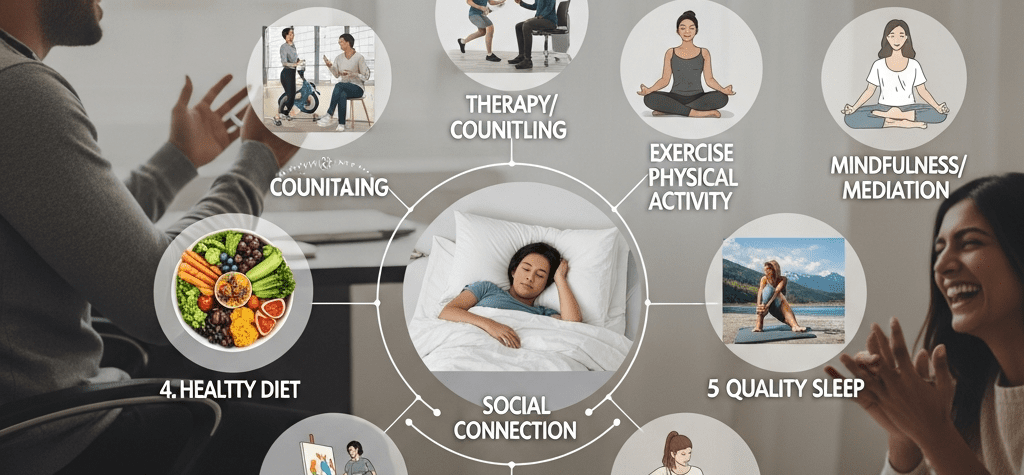
10 Evidence-Based Self-Help Strategies for Mild Depression
Author: RVLNSV PRASAD
Updated On: October 2026
About Us
Author Bio
Editorial Policy
Contact Us
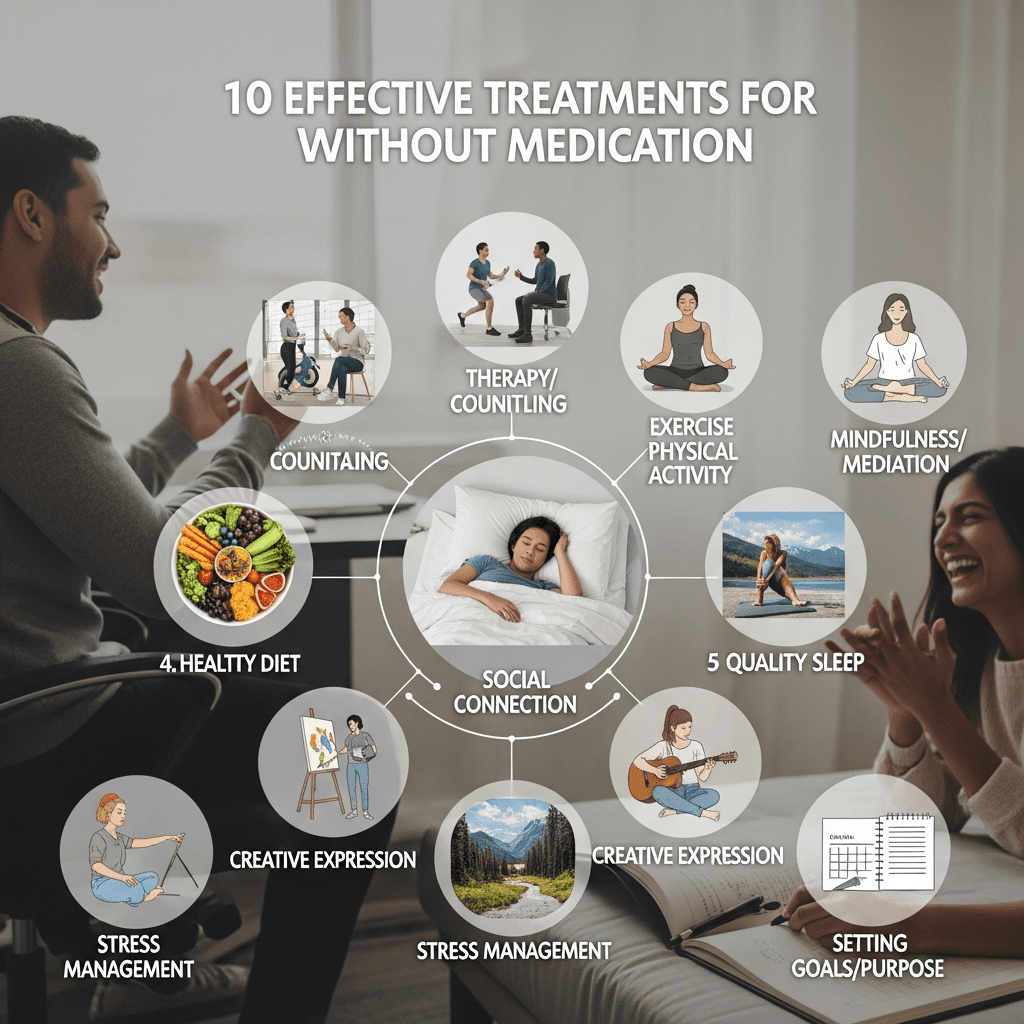
Introduction
Depression can make ordinary life feel unexpectedly difficult. Getting out of bed may require more effort than usual, familiar activities may lose their appeal, and even simple decisions can feel exhausting. Some people also notice changes in sleep, appetite, concentration, or their ability to connect with others.
When this happens, advice such as “think positively” or “keep yourself busy” can feel frustrating rather than helpful. A person experiencing depression may already be trying hard to get through the day.
The good news is that there are practical ways to seek support and begin rebuilding everyday routines. Self-help strategies for mild depression can include structured guided self-help, behavioral activation, gentle physical activity, regular sleep habits, and maintaining contact with supportive people.
However, not every self-help method has the same level of evidence. Guided self-help based on cognitive behavioral therapy (CBT), for example, is different from simply reading motivational quotes or trying a new wellness habit.
The World Health Organization’s depression guidance, updated in September 2026, identifies psychological treatments as effective options and recognizes that self-care can support recovery. It also emphasizes the importance of seeking professional help when depression symptoms occur.
This guide explains ten practical approaches, what current research suggests, how to start when motivation is low, and when self-help may not be enough.
Quick Answer: What Are the Best Self-Help Strategies for Mild Depression?
Useful starting points include structured guided self-help, scheduling small enjoyable activities, gentle exercise, maintaining a regular sleep routine, eating regularly, staying connected with trusted people, and learning practical coping skills.
For someone experiencing less severe depression, a healthcare professional may recommend guided self-help based on CBT, behavioral activation, problem-solving, or psychoeducation. These approaches are more structured than general wellness advice.
The NICE depression guideline recommends discussing suitable treatment options according to a person’s clinical needs and preferences. Guided self-help is one option for less severe depression, usually delivered through structured materials with support from a trained practitioner.
Self-help can be a starting point, but it should not become a reason to delay care. If symptoms persist, worsen, or interfere with daily life, seek professional assessment.
Key Takeaways
- Self-help can support recovery, especially when it includes structured approaches with evidence behind them.
- Guided self-help, CBT-based materials, and behavioral activation are different from unstructured wellness tips.
- Small activities can be easier to begin than ambitious routines when energy and motivation are low.
- Exercise, sleep habits, balanced meals, and social connection may support well-being, but none is a guaranteed cure.
- Depression severity, personal circumstances, and treatment preferences matter when choosing an approach.
- Professional help is appropriate when symptoms persist, worsen, or affect everyday functioning.
- Never stop prescribed antidepressants or change their dosage without discussing it with the prescribing clinician.
What Does Research Say About Self-Help for Mild Depression?
The evidence is strongest when self-help follows a structured psychological approach rather than relying entirely on general lifestyle changes.
Guided self-help is more than reading advice online.
Guided self-help commonly uses structured workbooks, online programs, or digital materials based on established psychological methods. A trained practitioner provides support, reviews progress, and helps the person work through the material.
The NHS treatment guidance for depression explains that guided self-help may be recommended for mild depression and often involves working through a CBT-based workbook or online course with support.
The NICE guideline describes guided self-help as a structured option that typically involves six to eight regular sessions. The materials may use CBT, behavioral activation, problem-solving, or psychoeducation. Read the NICE recommendations for less severe depression for details.
This distinction matters because a structured program provides a process to follow. It is not simply a list of habits that a person is expected to manage alone.
A major 2026 review examined behavioral activation.
Behavioural activation is a psychological approach that helps people identify and gradually return to meaningful activities. It addresses the cycle in which low mood leads to withdrawal, reduced activity, and fewer opportunities for rewarding experiences.
An August 2026 systematic review and meta-analysis in Clinical Psychology Review included 105 trials involving 13,933 participants. It found that behavioral activation was effective for adults with depression. Self-guided versions also showed benefits, although their effects were smaller than those observed across the broader treatment evidence. The authors reported substantial variation between studies, so results should not be assumed to apply equally to everyone.
Read the 2026 systematic review of behavioral activation for depression.
This is a particularly useful finding for people who struggle to begin daily activities. Rather than waiting for motivation to return, behavioral activation helps people plan manageable actions and gradually rebuild routine.
Exercise research is encouraging, but it has limitations.
A 2024 systematic review and network meta-analysis published in The BMJ examined 218 studies involving 14,170 participants. It found that several forms of exercise, including walking or jogging, yoga, and strength training, were associated with reductions in depression symptoms compared with active controls.
However, the researchers rated confidence in much of the evidence as low or very low. Exercise can be a useful component of depression care, but the findings do not mean that every person will improve with exercise alone.
The overall lesson is that self-help can play a meaningful role, particularly when it is evidence-based and adapted to the person’s needs. It should not be presented as a universal replacement for professional treatment.
10 Self-Help Strategies for Mild Depression
1. Try Structured Guided Self-Help
If you want a practical place to begin, consider a structured self-help program recommended by a qualified healthcare professional.
Look for materials based on established approaches such as CBT, behavioral activation, problem-solving, or psychoeducation. A suitable program should explain what to practice, how to work through exercises, and how to review progress.
CBT-based self-help may help you identify unhelpful thinking patterns and understand how thoughts, feelings, and behaviors interact. Behavioural activation places greater emphasis on activity patterns and gradually returning to meaningful parts of life.
The National Institute of Mental Health’s overview of psychotherapy explains how evidence-based psychological treatments can help people work with thoughts, emotions, and behaviors that affect mental health.
How to start: Choose one structured program rather than collecting multiple books and apps. Set aside a manageable period for the first exercise, and ask for professional guidance if you are unsure which approach is appropriate.
2. Use Behavioral Activation to Plan Small Activities
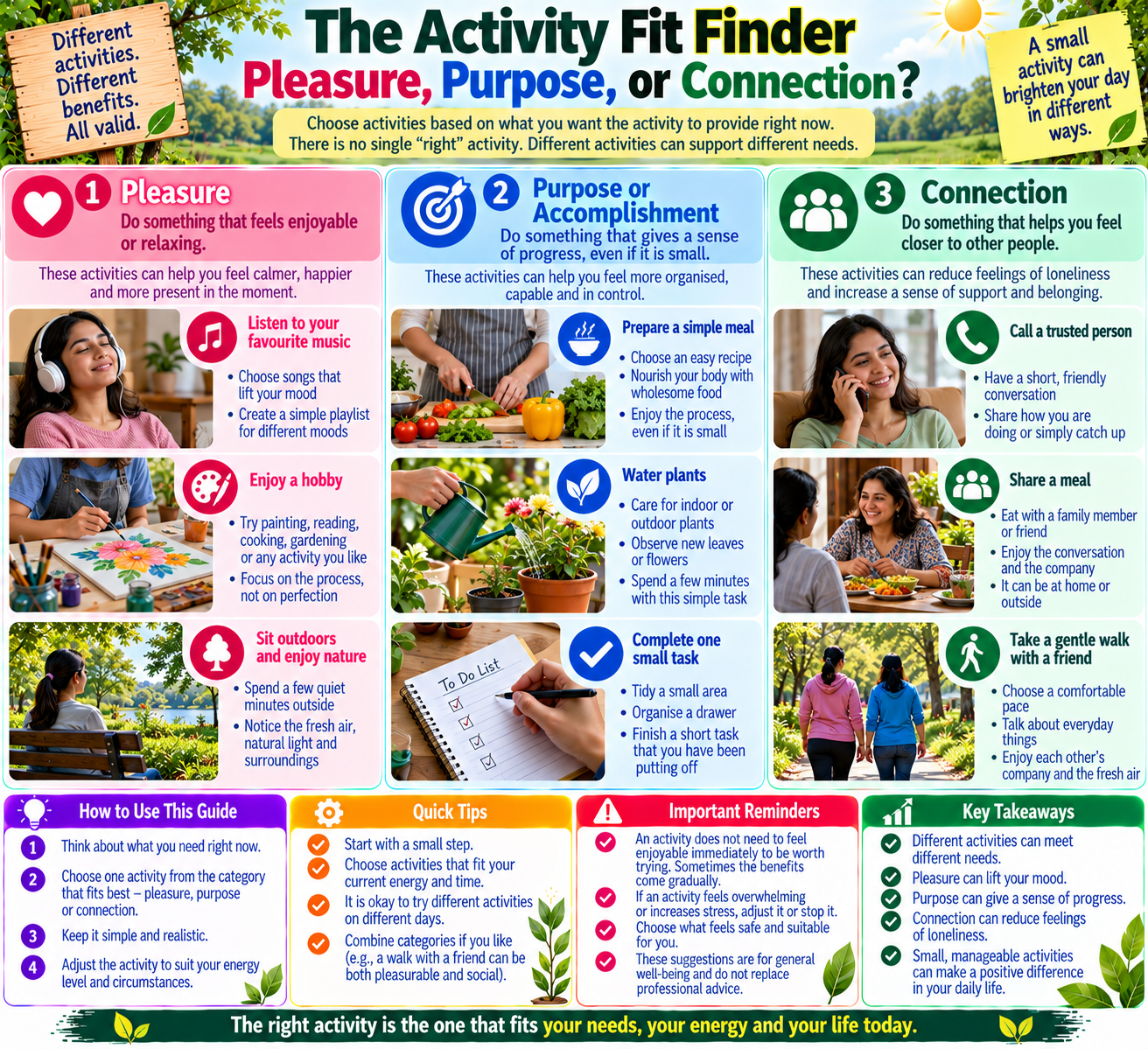
Depression can create a difficult cycle. You may feel low, withdraw from activities, and then have fewer opportunities to experience connection, accomplishment, or enjoyment.
Behavioural activation aims to interrupt that cycle through small, planned actions. The activity does not have to make you feel better immediately. Its purpose is to help you gradually reconnect with daily life.
Examples include
- Preparing a simple meal.
- Watering a plant.
- Taking a short walk.
- Calling someone you trust.
- Spending a few minutes on a hobby you previously enjoyed.
Start by choosing one action that seems manageable. If it feels too difficult, reduce the task rather than abandoning it altogether.
The 2026 behavioral activation meta-analysis supports this approach while also showing that treatment effects vary. Structured behavioral activation is a psychological intervention, not merely a productivity technique.
A useful distinction: You do not need to feel motivated before taking every small step. At the same time, you should not blame yourself if depression makes an activity difficult. The plan needs to fit your current capacity.
3. Build Gentle Physical Activity Into Your Day
Exercise may support mood, sleep, physical health, and general well-being. When motivation is low, however, a demanding workout plan can become another source of pressure.
Begin with an activity you can manage, such as walking around your home, taking a short outdoor walk, stretching gently, or following an appropriate low-impact routine.
The NHS guide to coping with depression recommends physical activity and suggests starting gently if you have not exercised for a while.
Research published in The BMJ found that several forms of exercise were associated with improvements in depression symptoms, although the certainty of evidence differed between exercise types. See the exercise and depression systematic review.
Practical starting point: Choose five minutes of comfortable movement if that feels achievable. You can increase the duration when appropriate, but do not treat a specific number of minutes as a guaranteed treatment dose.
If you have a medical condition, a recent injury, or significant mobility limitations, choose suitable movement and seek advice when needed.
4. Keep a More Consistent Sleep Routine
Depression can affect sleep in different ways. Some people struggle to fall asleep or wake frequently, while others sleep longer than usual and still feel tired.
A regular routine may help make sleep and daily activities more predictable. It will not resolve every cause of depression, but it can be a useful part of a broader care plan.
Try these steps:
- Wake up at a reasonably consistent time when possible.
- Keep a relaxing activity in your evening routine.
- Avoid using alcohol as a sleep aid.
- Reduce stimulating activities before bed if they make it harder to settle.
- Talk with a healthcare professional if sleep problems continue.
The NIMH depression guidance recommends maintaining a regular bedtime and wake-up time as part of self-care.
Avoid turning sleep into another test you must pass. If you have a poor night, return to your routine as best you can instead of assuming the next day is ruined.
5. Eat Regular Meals Without Demanding a Perfect Diet
Depression may affect appetite, energy, and the motivation to prepare food. Some people eat less, while others eat more than usual or rely on convenient foods because cooking feels difficult.
Instead of following a restrictive diet, focus on making eating more manageable. Keep easy foods available, aim for regular meals where possible, and include a variety of foods that fit your needs, preferences, and budget.
Examples of simple options include lentils with rice, eggs with whole-grain toast, yogurt with fruit, or vegetables with a convenient protein source.
Nutrition supports overall health, but there is no single food or meal plan proven to cure depression. Be cautious of supplements marketed as antidepressants, especially products that claim to replace standard care.
The NIMH depression resource recommends regular, healthy meals as part of self-care. If you have significant appetite or weight changes, discuss them with a healthcare professional.
6. Maintain Contact With Someone You Trust
Depression can make social interaction feel tiring. You may cancel plans, avoid messages, or feel that you do not have enough energy to explain what is happening.
You do not have to attend large gatherings or discuss everything at once. A short conversation with someone you trust can be a manageable starting point.
Try sending a simple message, arranging a brief call, or asking someone to accompany you on a walk. If talking feels difficult, you could say that you are having a challenging time and would appreciate some company.
The NHS guide to coping with depression recommends staying in touch with friends and family rather than withdrawing from life.
Social connection is not a substitute for treatment, and not every relationship is supportive. Choose people who respect your boundaries and make you feel safe.
7. Practice a Simple Thought-Checking Exercise
Unhelpful thoughts can become convincing when you feel depressed. You may conclude that nothing will improve, that you are a burden, or that one difficult experience proves you cannot succeed.
A thought-checking exercise does not require you to replace every negative thought with a positive one. Instead, it encourages you to examine a thought more carefully.
Try this three-step process:
Write down the thought. For example, “I did not finish my tasks today, so I am useless.”
Identify the evidence. You may have had a difficult day, but that does not establish that you are useless or incapable.
Develop a more balanced response. For example, “I struggled today, and I can choose one small task to try tomorrow.”
This is a simplified educational exercise, not a complete CBT treatment. A therapist can help you work with persistent or distressing thought patterns.
The NIMH explanation of psychotherapy describes how CBT helps people identify and change unhelpful patterns of thinking and behavior.
If a thought exercise increases distress or becomes repetitive self-criticism, pause and seek guidance rather than forcing yourself to continue.
8. Use Journaling to Notice Patterns, Not Judge Yourself
Writing can help you describe what you are experiencing, identify recurring concerns, and prepare for a conversation with a healthcare professional.
You do not need to write a long diary every day. A few brief notes may be enough.
You could record:
- How your mood has felt today.
- Whether sleep or appetite has changed.
- One activity you attempted.
- Something that made the day harder.
- One form of support you might need.
Avoid treating a journal as a scorecard for success or failure. Some days will contain fewer activities, and that does not mean you have failed.
A journal can also help you notice when symptoms are becoming more persistent. If you observe a worsening pattern, consider sharing it with a healthcare professional.
Practical insight: If writing about feelings is uncomfortable, use a simple checklist instead. The purpose is to make your experience easier to understand, not to create another obligation.
9. Spend Time Outdoors in a Way That Feels Manageable
Outdoor time can combine gentle movement, a change of surroundings, and opportunities to notice natural details. Some people enjoy walking in a park, gardening, sitting in a courtyard, or observing birds from a balcony.
Start with an accessible activity rather than expecting yourself to take long walks or travel to a remote location.
For example, you could sit outside for a few minutes, water a plant, or walk along a familiar route. If weather, pollution, safety, or mobility makes outdoor access difficult, choose another suitable activity.
The WHO depression fact sheet includes regular physical activity among the self-care steps that may support well-being.
Outdoor activities are not a stand-alone treatment for clinical depression. Their value is as a possible component of a wider routine, and individual responses differ.
10. Reduce Alcohol and Be Careful With Supplements
Alcohol may seem to offer temporary relief, but it can worsen sleep, affect mood, and make it harder to manage daily problems. Recreational drugs may also complicate symptoms or treatment.
If you drink regularly, consider discussing your use with a healthcare professional, especially if stopping suddenly could cause withdrawal symptoms.
Be equally cautious with supplements advertised for depression. “Natural” does not automatically mean safe, and supplements can interact with prescription medicines or cause side effects.
The NIMH depression resource advises avoiding alcohol and drugs that are not prescribed. If you are considering a supplement, discuss it with a clinician or pharmacist before taking it.
Comparison Table: Which Self-Help Approach Should You Try?
Different approaches serve different purposes. This table can help you identify a starting point without assuming that every strategy is equally effective.
| Approach | Main purpose | How to begin | Important limitation |
|---|---|---|---|
| Guided self-help | Structured coping skills | Ask about a CBT-based or behavioral program. | Support and suitability matter. |
| Behavioural activation | Reconnect with meaningful activities. | Schedule one small action. | Progress may be gradual. |
| Physical activity | Support mood and physical health. | Try comfortable movement | Not a guaranteed stand-alone treatment |
| Sleep routine | Make daily rhythms more consistent. | Set a realistic wake-up time. | Persistent sleep problems may need assessment. |
| Regular meals | Support general health and energy. | Keep manageable foods available. | Food alone does not treat depression. |
| Social connection | Reduce withdrawal and support belonging. | Contact one trusted person. | Some relationships may not be supportive. |
| Thought-checking | Examine unhelpful thinking patterns. | Write one thought and a balanced response. | A brief exercise is not a substitute for therapy. |
| Journaling | Notice patterns and prepare for care. | Record a few observations | Stop if it increases distress. |
| Outdoor activity | Add movement or a change of surroundings. | Sit outside or take a short walk. | Access and individual responses vary. |
| Reducing alcohol | Avoid a potential contributor to low mood. | Review drinking habits with support. | Heavy use may require medical guidance. |
A Gentle Seven-Day Starting Plan
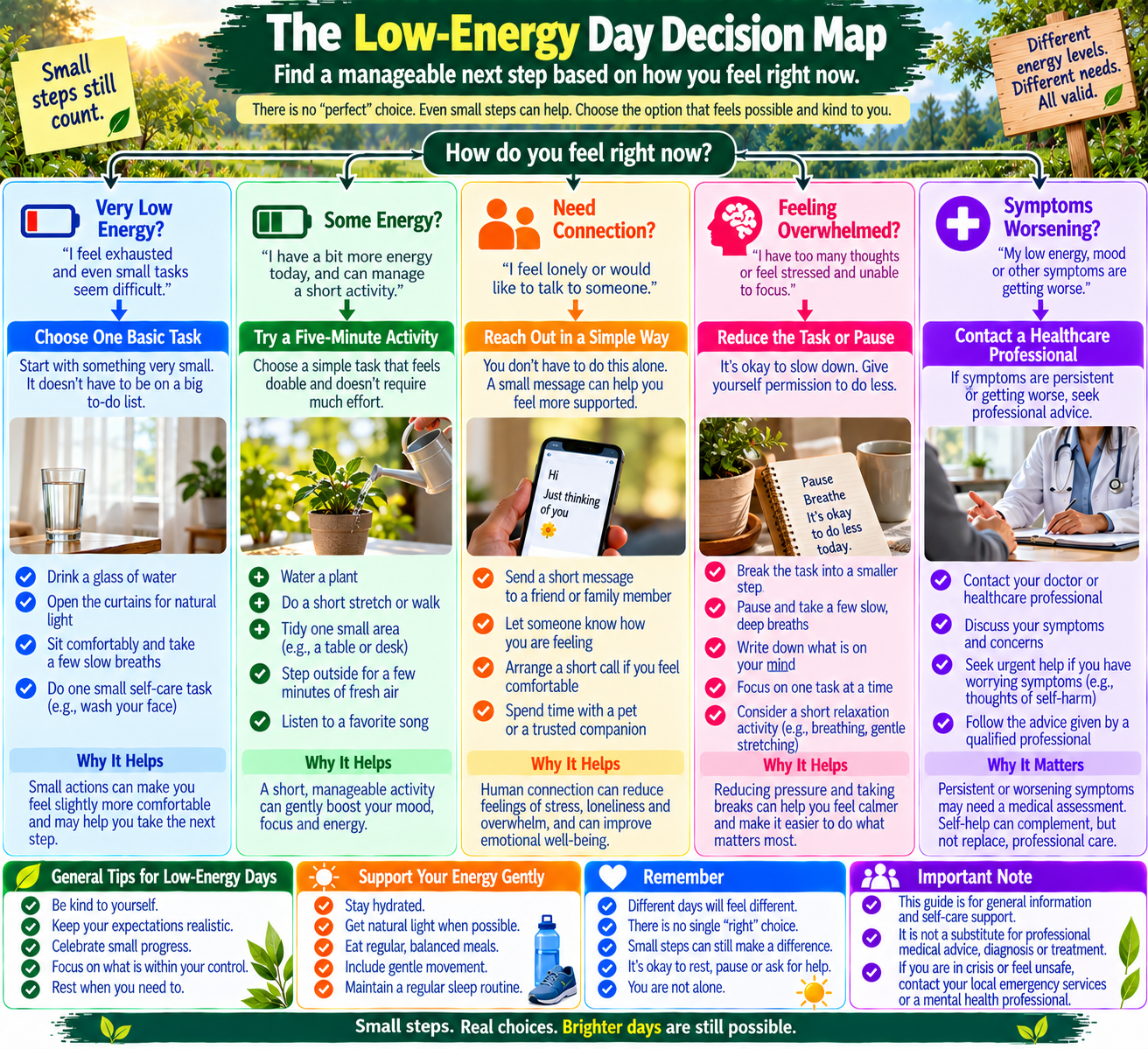
When depression affects motivation, a long list of tasks may feel overwhelming. This example plan focuses on manageable actions rather than rapid transformation.
| Day | Small action | Optional reflection |
|---|---|---|
| Monday | Contact one trusted person. | Was the contact manageable? |
| Tuesday | Try five minutes of comfortable movement. | How did the activity feel? |
| Wednesday | Prepare or eat a regular meal. | Was eating easier with a plan? |
| Thursday | Spend a few minutes outdoors or near plants. | Did the change of setting suit you? |
| Friday | Write a brief note about your mood. | Is there a pattern worth discussing? |
| Saturday | Try one small enjoyable or meaningful activity. | Was the task realistic? |
| Sunday | Review the week without judging yourself. | What support might help next week? |
This plan is an example, not a treatment protocol. You can change the order, repeat an activity, or leave something out.
If a task feels too difficult, reduce it to a smaller step. If you are receiving treatment, use this plan only as a complement to the guidance you have been given.
Common Mistakes When Trying Self-Help for Depression
Expecting every strategy to work immediately
Some changes take time, and some approaches may not suit you. A lack of immediate improvement does not mean that you have failed.
Treating depression as a lack of discipline
Depression can affect motivation, concentration, sleep, and energy. Struggling to complete tasks is not evidence of a personal weakness.
Trying too many changes at once
Starting a new exercise routine, strict diet, sleep schedule, and journaling habit on the same day can create unnecessary pressure. Begin with one or two manageable actions.
Using general wellness advice instead of evidence-based support
Meditation, journaling, and outdoor activities may be helpful for some people, but they are not interchangeable with structured psychological treatments. Consider guided self-help or professional assessment when appropriate.
Assuming medication is always unnecessary
Some people with less severe depression may benefit from psychological treatment without antidepressants. Others need medication, combined treatment, or a different level of support. Decisions should be made according to clinical needs and informed preferences.
Stopping prescribed treatment without advice
Do not discontinue antidepressants or change their dosage on your own. If you have concerns about side effects or treatment preferences, discuss them with the prescribing clinician.
When Is Professional Help Necessary?
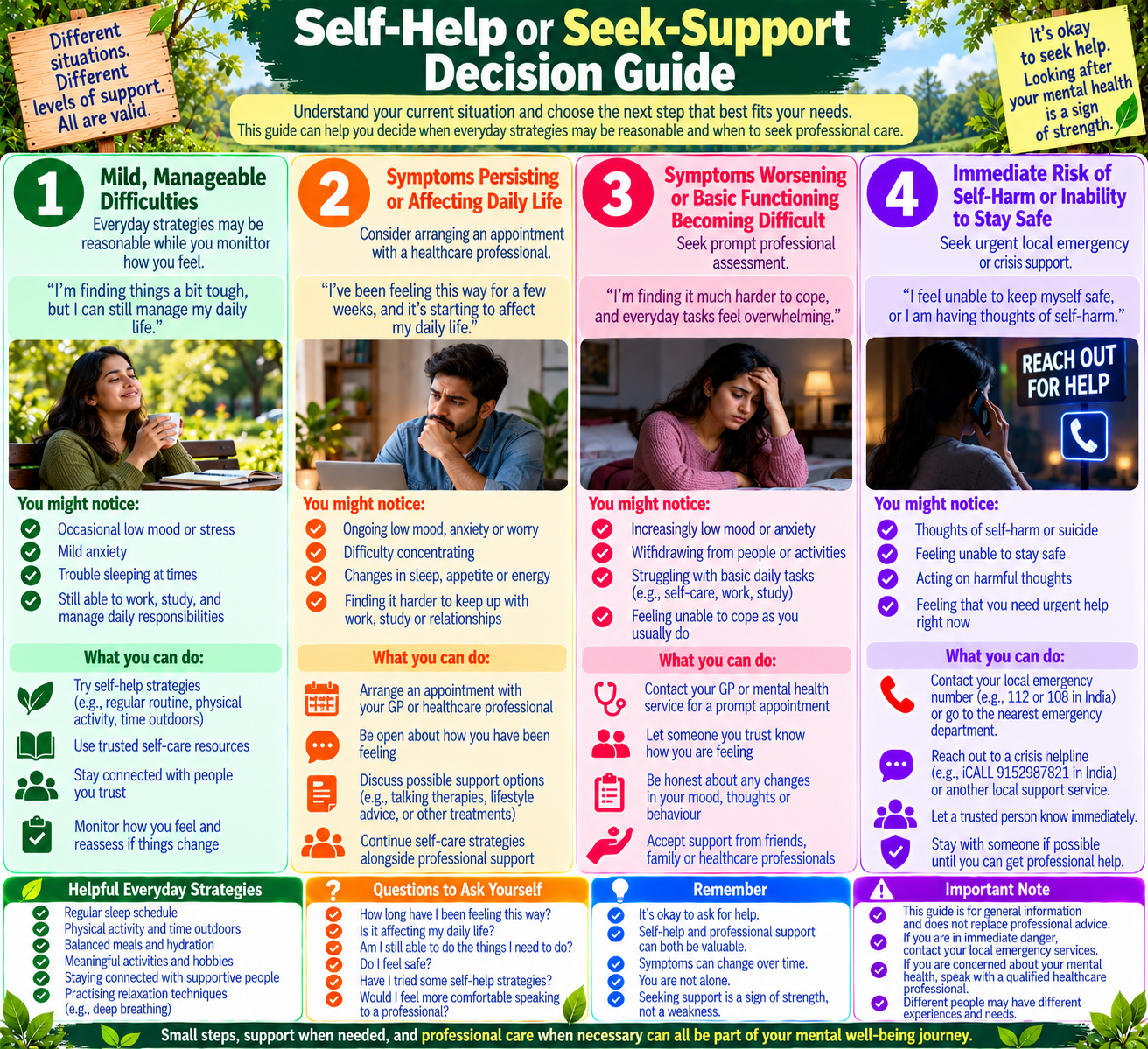
Self-help may be useful for less severe symptoms, but it is not always enough.
Consider speaking with a healthcare professional if low mood or loss of interest lasts for two weeks or longer, affects your ability to work or study, disrupts relationships, or makes daily responsibilities difficult. Seek help sooner if symptoms are severe or worsening.
Depression can involve more than sadness. Symptoms may include low energy, poor concentration, sleep changes, appetite changes, feelings of worthlessness, hopelessness, or thoughts of death. The WHO depression fact sheet explains these symptoms and outlines effective treatment options.
A professional can assess your symptoms, discuss possible contributing factors, and help you choose an appropriate plan. Treatment may involve guided self-help, psychotherapy, medication, or a combination, depending on your situation.
If you are in India and need mental health support, the Government of India’s Tele-MANAS service can be reached at 14416 or 1800-891-4416. Details are available through the Directorate General of Health Services.
If you may act on thoughts of suicide or cannot keep yourself safe, seek urgent help through local emergency services or go to the nearest emergency department. Contact someone you trust who can stay with you while you obtain help.
Frequently Asked Questions
1. What are the best self-help strategies for mild depression?
Structured guided self-help, behavioral activation, regular physical activity, consistent sleep habits, social connection, and practical coping skills are useful starting points. The right combination depends on individual needs and the severity of symptoms.
2. Can mild depression improve without medication?
Some people with less severe depression improve with psychological treatments or guided self-help without antidepressants. Others benefit from medication or combined treatment. A healthcare professional can help determine suitable options.
3. What is guided self-help for depression?
Guided self-help uses structured materials based on psychological approaches such as CBT or behavioral activation, usually with support from a trained practitioner. It is more structured than simply reading general advice online.
4. How long does self-help take to work?
There is no guaranteed timeline. Progress depends on the approach, symptoms, circumstances, and support available. NICE describes guided self-help programs that often involve six to eight structured sessions, but this does not mean every person will improve within that period.
5. Can exercise help with depression?
Research suggests that exercise can reduce depression symptoms for some people. Walking, yoga, and strength training have been studied, but the certainty of evidence varies. Exercise should complement an appropriate care plan rather than replace necessary treatment.
6. Are natural remedies enough to treat depression?
Not necessarily. General wellness habits may support well-being, but they are not all proven depression treatments. Be cautious with supplements and seek professional advice when symptoms persist or interfere with daily life.
7. Is journaling a proven treatment for depression?
Journaling can help some people reflect on feelings and recognize patterns, but it is not equivalent to a structured psychological treatment. If writing makes you feel worse, stop and consider another approach.
8. Should I stop antidepressants if I feel better?
No. Do not stop or change prescribed medication without speaking to your prescribing clinician. They can explain the risks and help you make an appropriate plan if you wish to review treatment.
9. What if I cannot motivate myself to do anything?
Begin with a smaller task, such as sitting near a window, washing one cup, or sending a short message. If even basic tasks feel impossible or symptoms are persistent or worsening, seek professional support rather than blaming yourself.
10. When should I seek help for depression?
Seek assessment if symptoms persist, worsen, or affect daily functioning. Get urgent help if you are at risk of harming yourself or cannot keep yourself safe.
Conclusion: Start Small, but Do Not Face Depression Alone
Self-help strategies for mild depression can provide a practical way to begin rebuilding routines, reconnecting with meaningful activities, and developing coping skills. Structured approaches such as guided self-help and behavioral activation have stronger evidence than many general wellness claims, while exercise, regular sleep, balanced meals, and social connection can support broader well-being.
Research published in 2026 strengthens the evidence for behavioral activation, including self-guided versions, although the benefits vary between people and studies. This is a reason to take structured self-help seriously, not a reason to assume that self-help alone is enough for everyone.
Choose one manageable step rather than attempting to change your entire life at once. Review what feels useful, adapt the plan when necessary, and seek professional support if symptoms continue or become more difficult to manage.
Most importantly, depression is not a personal failure. You deserve appropriate care and support, whether that means guided self-help, psychotherapy, medication, or a combination suited to your needs.
Author Note
Author: RVLNSV PRASAD
This article is intended to explain evidence-based self-help options and support informed conversations about depression care. It is not a substitute for clinical assessment or individualized treatment advice.
Personal experience: Add a first-person account here only if it reflects your genuine experience. A useful example could describe a small routine you actually tried, what made it difficult to maintain, and what you learned. Do not claim that a personal experience proves a treatment works for everyone, and do not present an invented patient story as fact.
Medical Disclaimer
This article is for educational purposes only and does not diagnose, treat, or prevent depression. Depression can range from less severe to severe and may require professional assessment and treatment. Do not stop prescribed medication or delay necessary care because of information in this article. Seek qualified medical or mental health advice for persistent, worsening, or concerning symptoms.
Fitness Disclaimer
Physical activity should be adapted to your health, mobility, fitness level, and medical circumstances. Start gradually, avoid activities that cause unusual symptoms, and seek professional guidance if you have a medical condition or exercise limitations. Exercise is a potential support for mental well-being, not a guaranteed treatment for depression.
Sources
- World Health Organization—Depressive Disorder (Depression), updated September 2026
- NICE — Depression in Adults: Treatment and Management, Recommendations
- NHS — Treatment for Depression in Adults
- NHS — How to Cope with Depression
- National Institute of Mental Health — Depression
- National Institute of Mental Health — Psychotherapies
- 2026 Systematic Review and Meta-Analysis — Behavioural Activation for Depression
- The BMJ — Exercise for Depression: Systematic Review and Network Meta-Analysis
- Government of India — National Mental Health Programme and Tele-MANAS
click here for natural remdies for anxiety
Related Content
- Benefits of Outdoor Activities for Mental Health: A Comprehensive Guide
- How Nature Walks Can Improve Physical Health: A Comprehensive Guide
- 6 Mindfulness Practices for Mental Well-being: A Path to Inner Peace and Emotional Resilience
- Mind Mood Care










[…] 10 Effective Treatments for Depression Without Medication […]